
You Approved the AI Budget. So Why Isn’t It Working?
The dashboards looked promising.
Predictions were sharp.
Everyone talked about “smart factories” and “data-driven decisions.”
But 6–9 months later?
Your teams are still relying on Excel.
Production meetings still run on assumptions.
And that AI initiative?
Quietly sitting in pilot mode.
Here’s the Reality
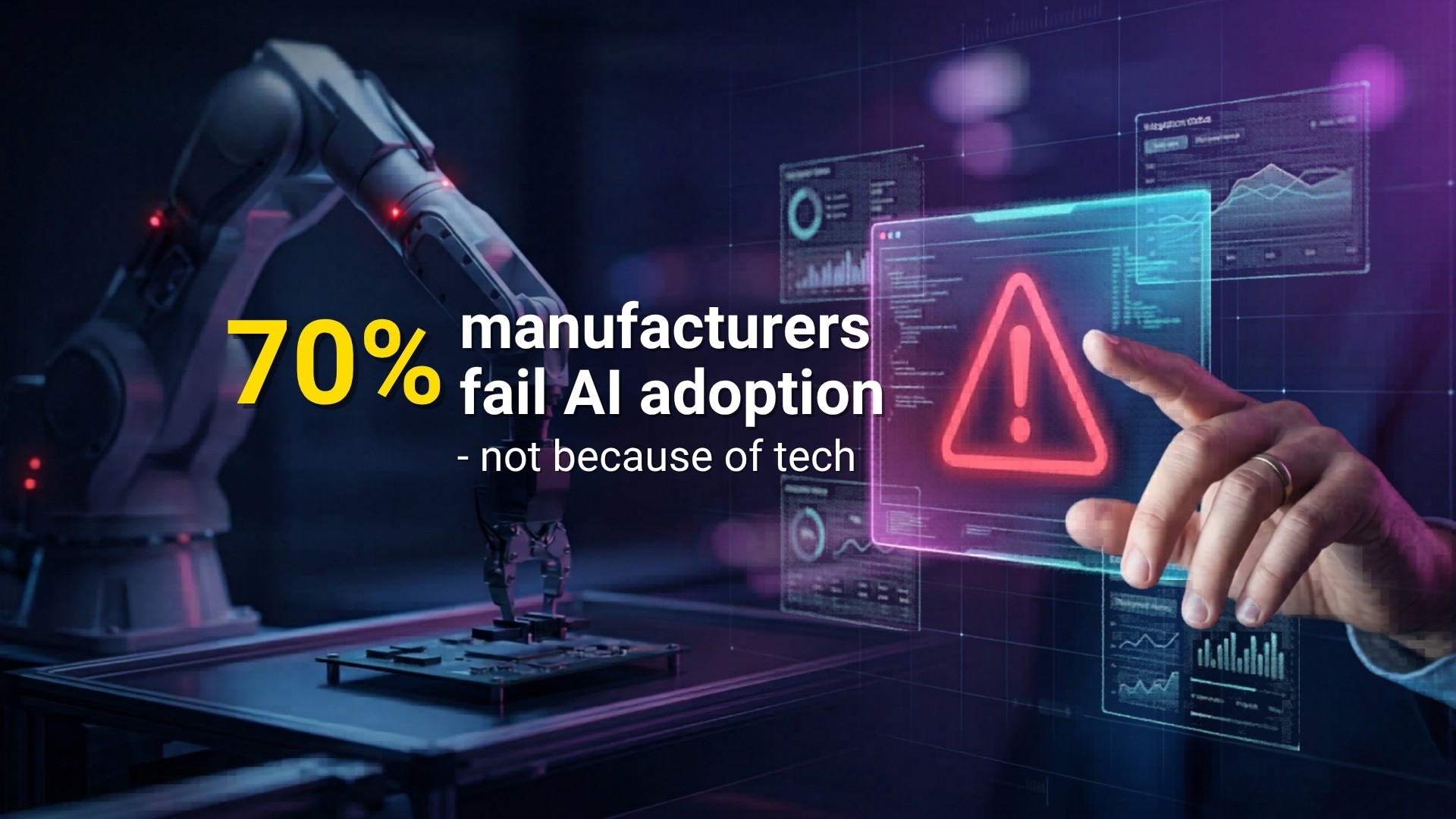
70–85% of AI initiatives fail to meet expectations
42% of companies abandoned most of their AI projects in 2025
Almost everyone has started.
Very few are actually succeeding.
The Real Problem Isn’t AI. It’s Your Operations.
Walk into a typical manufacturing setup:
Sales forecasts live in CRM
Production planning happens separately
Inventory sits in ERP
Shop-floor data stays on machines
Nothing talks to each other.
Now layer AI on top of this.
What happens?
Fragmented data goes in
Conflicting insights come out
Teams stop trusting the system
Leadership sees one version of truth.
Operations sees another.
And decisions?
Still made on gut.
Most companies don’t fail at AI.
They get stuck in pilot purgatory - running demos that never scale.
Why AI Fails (And What No One Tells You)
Here’s the uncomfortable truth:
AI is not failing. Your systems are.
Most manufacturers approach AI like a machine:
Buy it
Install it
Expect output
But AI doesn’t work that way.
AI is not a plug-and-play tool.
It’s an outcome of:
Clean data
Connected systems
Standardized processes
If your systems are disconnected → AI scales confusion
If your data is delayed → AI gives outdated insights
If your teams don’t trust it → AI gets ignored
The real problem isn’t execution.
It’s adoption + system readiness.
Where Most Manufacturing Leaders Go Wrong
They try to “add AI” on top of broken operations.
Without fixing:
ERP disconnected from shop-floor systems
CRM not aligned with production
Manual reporting dependencies
No ownership of operational data
Result?
AI becomes an expensive dashboard - not a decision engine.
What Needs to Change Before AI Can Work
Before thinking about AI, fix what AI depends on.
1. Connect Your Systems
Sales, production, inventory, and operations must work as one.
Platforms like Dynamics 365 and Salesforce should act as a single source of truth—not isolated tools.
2. Build Real-Time Visibility
If your reports take hours (or days), your decisions will always lag.
You need live visibility across:
Orders
Production status
Inventory levels
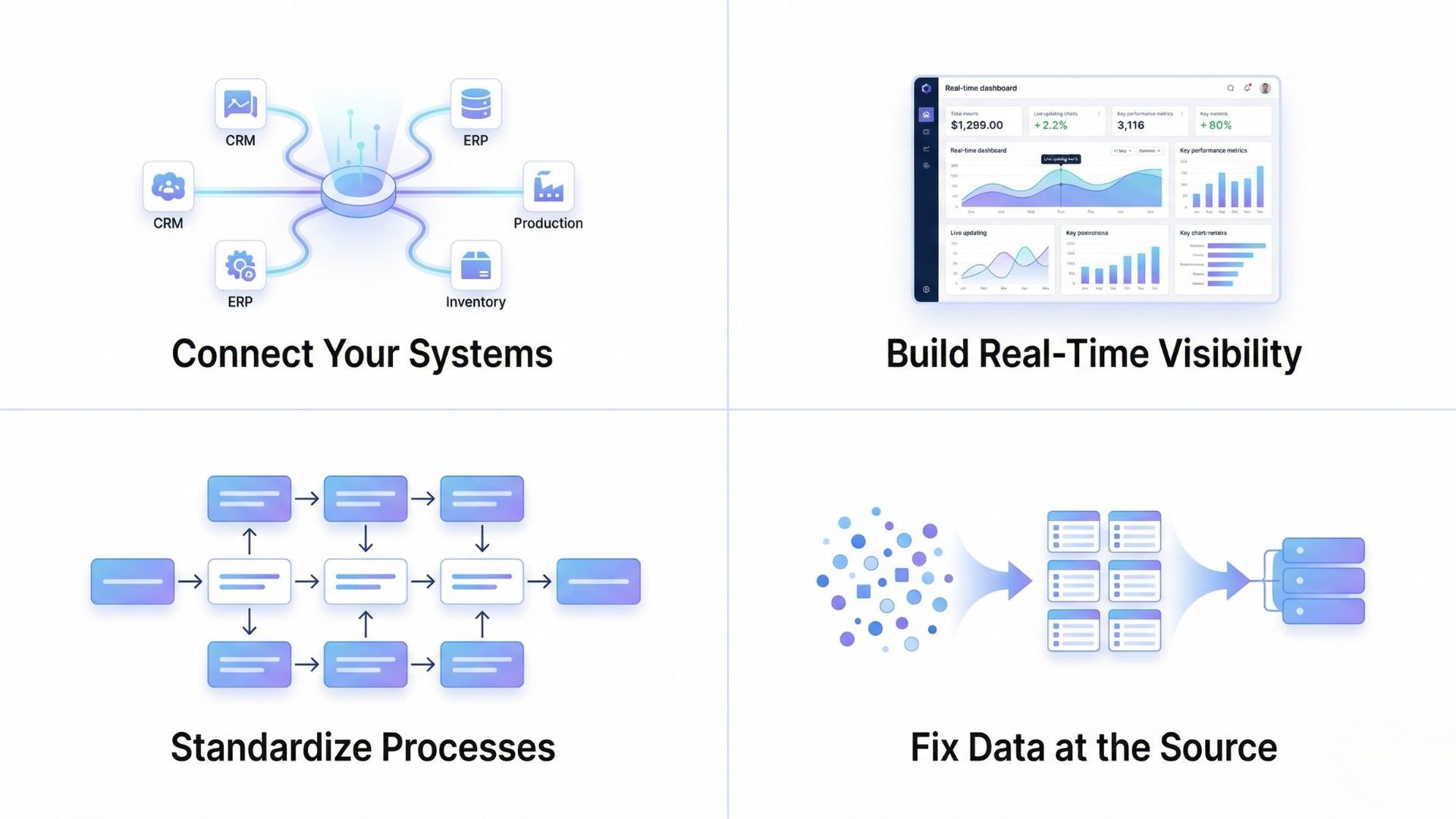
3. Standardize Processes
AI cannot scale across inconsistency.
Standard processes → predictable data → reliable insights
4. Fix Data at the Source
No model can fix bad data.
If your operations still depend on spreadsheets and manual updates,
AI will only amplify the errors.
What Success Actually Looks Like
Before:
Weekly reporting cycles
Frequent stockouts despite forecasting
Manual coordination between teams
After system alignment:
Real-time dashboards across departments
20%+ reduction in stockouts
Faster, more confident production decisions
No heavy AI investment at the start.
Just clean, connected systems.
Then AI started delivering value.
Final Thought: AI Is Not a Technology Decision
AI in manufacturing is not a technology upgrade.
It’s an operations decision that happens to involve technology.
The companies winning with AI aren’t buying better tools.
They’re building better systems.

Ready to Make AI Actually Work?
Most AI projects don’t fail because of AI.
They fail because no one fixed what AI depends on.
If your systems aren’t connected,
you don’t have an AI problem.
You have a visibility problem.
👉 Start with a system audit before investing in AI.


