
ERP + AI: What Most Companies Get Wrong
(And How to Actually Get It Right)
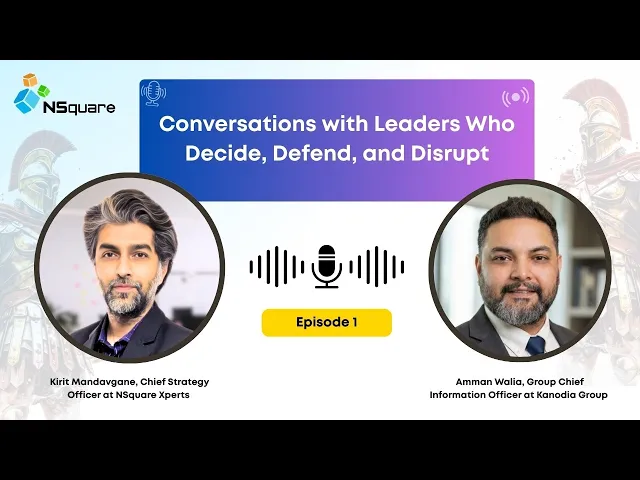
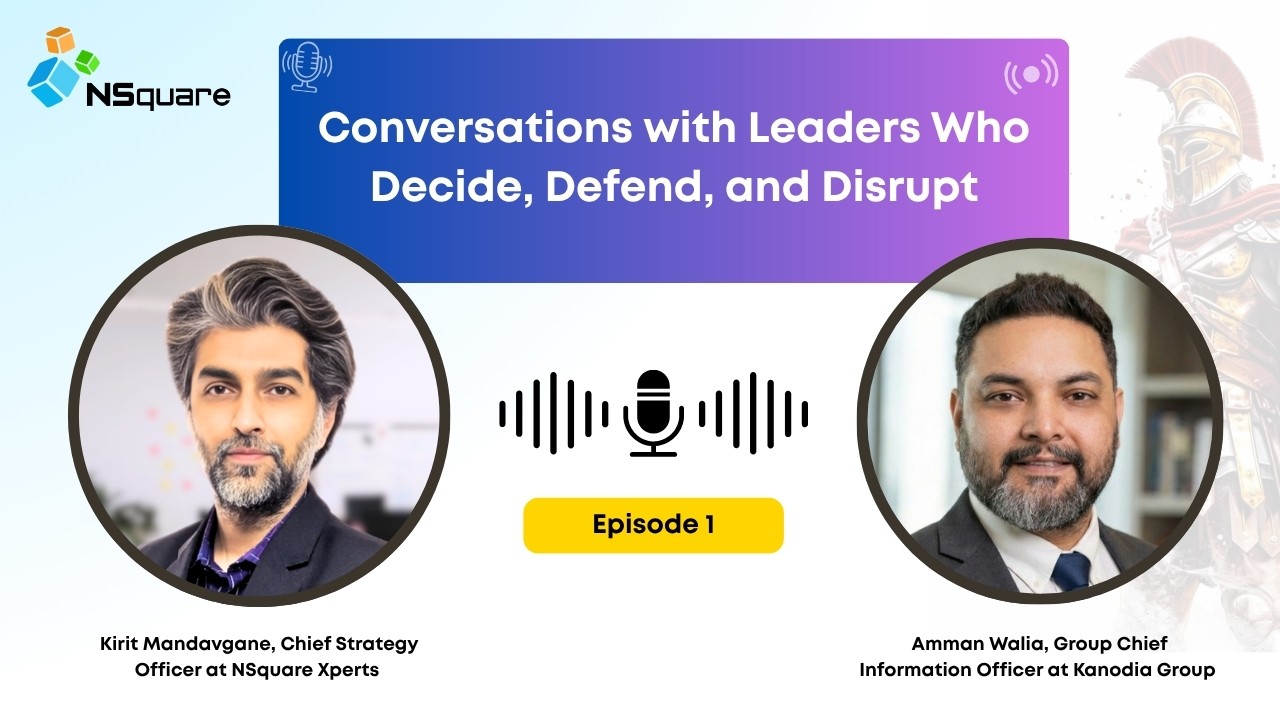
A conversation between Kirit Mandavgane, CSO at NSquare Xperts, and Amman Walia, Group CIO at Kanodia Group
Everyone's talking about AI in ERP. But very few are doing it right.
In a recent conversation between Kirit Mandavgane, Chief Strategy Officer at NSquare Xperts, and Amman Walia, Group CIO at Kanodia Group — a leader who has sat on both sides of the table, as an ERP user and a tech transformation driver — some refreshingly honest truths came out.
Here's what the hype doesn't tell you.
1. AI Isn't a Layer. It's a Rethink.
Most ERP vendors are doing the same thing: taking existing platforms and wrapping an AI layer around them. Automating accounts payable here. Flagging anomalies there. It looks good on a product page.
But Amman's take is sharper: "That is the tip of the iceberg."
The real value of AI in manufacturing and process industries isn't process automation — it's forecasting, demand generation, and production optimization at every step of the value chain. Until ERP platforms are rebuilt from the ground up with that in mind, the packaging is just packaging.
2. Your Data Is Probably Not AI-Ready. Check That First.
ChatGPT gave everyone the illusion that AI is plug-and-play. It isn't — not inside an enterprise.
Before any transformation journey begins, Amman's clear advice to CIOs and CFOs is this: audit your data landscape first. Is your data available in the right format? Is it clean, structured, and accessible across functions? Most organizations — including large enterprises — struggle here and don't know it until a pilot fails.
"AI will not work if the data is not right. Most people get disillusioned because they skipped this step."
3. 70% of AI MVPs Fail — And There's One Main Reason
McKinsey says it. Amman heard it confirmed in a room of 150+ Delhi NCR CIOs: 70% of AI MVPs fail.
The reason? Teams evaluate AI through a single functional lens — one department, one process, one outcome. But business processes don't work in silos. What happens in finance ripples into procurement. What happens in procurement affects sales.
The fix is a cross-functional process map before you write a single line of AI logic. Kanodia Group did this — they studied all processes horizontally and vertically, then built a roadmap that separated use cases by AI type: machine learning, deep learning, generative AI, agentic AI. Each got prioritized by impact and cost-benefit.
It took time. But it worked.
4. Real AI Impact Looks Like This: 10% Raw Material Cost Savings
Here's a concrete before-and-after from Kanodia Group's cement manufacturing operations.
Old approach: Rule-based optimizers that reacted when parameters went out of range. People called it AI. It wasn't.
New approach: AI that studies historical data patterns and predicts what will happen in the kiln 1-2 hours from now — before anything goes wrong. The prediction connects directly to an agentic AI layer that takes action automatically, removing the need for human intervention on 80% of those action items.
The result: roughly 10% reduction in raw material consumption costs. Production kept running. No downtime. No reactive firefighting.
That's what real AI ROI looks like.
5. Change Management Is Still the Hardest Part
Here's the uncomfortable truth Amman shares in every board meeting:
"People still think AI is going to take their jobs."
And he doesn't entirely disagree. He quotes Jensen Huang directly — the role of the traditional code developer is shifting. AI is hitting IT functions first. But the answer isn't fear. It's upskilling.
At Kanodia Group, they've invested in structured training programs, so employees learn to use AI as a tool, not compete with it as a peer. The mindset shift from "AI threatens me" to "AI amplifies me" is the real change management challenge — and no governance framework solves it for you.
6. Governance Is Non-Negotiable — But Policy Alone Won't Cut It
India's DPDP Act is here. The NIST framework exists. Europe has its AI governance standards. But Amman raises something more fundamental: governance needs a mechanism, not just a mandate.
His analogy: IEEE standards control how data flows through networks via hardware. AI-generated content should have something similar — a verifiable standard baked into infrastructure, not just policy documents that organizations check off and ignore.
Until that exists, enterprises need to build internal guardrails: define who accesses what, contain AI models within their business landscape, and treat governance as an ongoing practice — not a pre-launch checkbox.
AI and ERP are converging fast. But the organizations that win won't be the ones who moved fastest — they'll be the ones who assessed their data readiness, mapped their processes cross-functionally, picked the right problems, and treated AI as an evolving journey, not a one-time implementation.
As Amman puts it: "The new generation doesn't Google. They ask ChatGPT. ERP platforms need to catch up — and so do the organizations using them."
This post is based on NSquare Xperts' podcast series on pragmatic AI adoption. Kirit Mandavgane is the Chief Strategy Officer at NSquare Xperts. Amman Walia is the Group CIO at Kanodia Group.
Want to assess your organization's AI readiness? Let's talk→


