
Organizations today face a constant struggle to do more with less. Manage operations efficiently, cut costs, improve customer experiences, and stay ahead of competitors. Yet traditional systems often slow things down, relying on heavy IT involvement, siloed data, and rigid processes.
This is where Microsoft Power Platform has emerged as a game-changer. It provides the flexibility to innovate, automate, and analyze without requiring deep technical expertise, bridging the gap between business needs and technology.
What Is Microsoft Power Platform?
Microsoft Power Platform is a suite of low-code/no-code tools designed to help businesses quickly build apps, automate processes, analyze data, and create virtual agents.
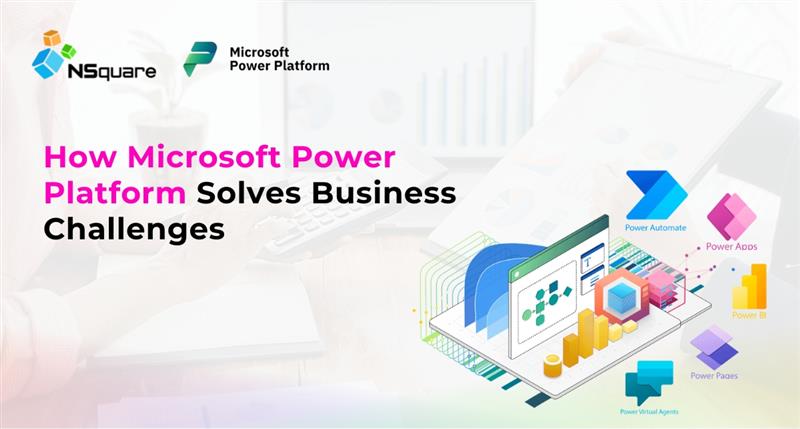
It brings together four core components:
Power BI
Power BI is a business analytics tool that connects to multiple data sources and presents them in interactive dashboards and reports. Instead of dealing with spreadsheets or static charts, businesses can track KPIs in real-time, forecast trends, and visualize complex data in a way that decision-makers can easily understand.
Power Apps
Power Apps allows businesses to create custom applications without requiring advanced coding skills. These apps can be tailored to unique needs like tracking field service requests, managing facility inspections, or streamlining HR approvals. The flexibility ensures that companies are not limited by off-the-shelf solutions but can instead build exactly what they need.
Power Automate
Formerly known as Microsoft Flow, Power Automate simplifies workflows by automating repetitive tasks. For instance, instead of manually sending emails when an approval is complete, Power Automate can trigger notifications automatically. It integrates across Microsoft 365, Dynamics 365, and third-party systems to ensure processes run smoothly without manual intervention.
Power Virtual Agents
Customer and employee support can be time-consuming. Power Virtual Agents enables organizations to create AI-powered chatbots that handle queries instantly, such as resetting passwords, tracking orders, or answering FAQs. The best part is that it doesn’t require data science expertise, making AI-driven engagement accessible to everyone.
Together, these four tools form a platform that empowers businesses to digitize and optimize their operations with minimal complexity.
What Can Microsoft Power Platform Do?
The Power Platform isn’t just about creating apps; it’s about helping businesses overcome limitations and adapt quickly. Here’s how it delivers real value:
Unify Data Across Systems
Organizations often struggle with fragmented data scattered across CRMs, ERPs, and external applications. Power Platform integrates these systems, creating a single, connected data environment. With all data in one place, businesses can identify trends, eliminate duplicates, and ensure teams are working with accurate information.
Automate Workflows
Manual work not only slows productivity but also increases the risk of errors. Power Automate enables teams to design workflows that trigger automatically, for example, generating invoices, sending reminders, or updating records across systems. This reduces human effort and allows employees to focus on higher-value tasks.
Enable Data-Driven Decisions
Relying on outdated reports can lead to missed opportunities. Power BI helps businesses shift to proactive decision-making by offering live dashboards and predictive insights. Sales managers can track pipeline changes instantly, finance teams can analyze budget variances, and operations leaders can see supply chain risks before they escalate.
Empower Non-Developers
Not every business has the luxury of a large IT team. Power Apps allows non-technical employees to build functional apps using a simple drag-and-drop interface. For instance, a facility manager could build an app to log maintenance requests without waiting weeks for IT development. This democratizes technology, putting innovation in the hands of everyday employees.
Enhance Customer Experience
Customers today expect instant responses. With Power Virtual Agents, companies can deploy chatbots to handle inquiries anytime, reducing wait times and improving satisfaction. Bots can be integrated into websites, Teams, or even social media, making customer interactions seamless and consistent.
Scale Operations
Business requirements change rapidly, and traditional solutions often struggle to keep up. Power Platform’s low-code foundation means apps and workflows can be adjusted as needs evolve. Whether it’s scaling from a local operation to a global enterprise or adapting to new compliance rules, the platform offers flexibility without major redevelopment costs.
Key Business Challenges Solved by Microsoft Power Platform
Breaking Down Data Silos
Data is often stored in disconnected systems, making it difficult to get a holistic view. By connecting these systems through Dataverse and Power BI, businesses can ensure all stakeholders have access to consistent and reliable data. This helps leaders make better decisions and reduces the frustration caused by mismatched reports.
Automating Time-Consuming Tasks
Processes like approvals, notifications, or document handling consume valuable time. Power Automate eliminates these bottlenecks by creating flows that run automatically. For example, a purchase order request can move from submission to approval without manual follow-ups, ensuring speed and accuracy.
Building Custom Apps Faster
In industries like field service or facility management, unique challenges often require specialized apps. Power Apps allows teams to build and deploy these quickly. This shortens development timelines and reduces costs compared to traditional coding.
Making Smarter Decisions with Real-Time Analytics
Instead of relying on static monthly reports, businesses can leverage Power BI to get real-time updates. Dashboards can highlight performance dips, customer behavior patterns, or compliance risks instantly, helping organizations respond quickly to opportunities and threats.
Improving Customer Engagement
Customers no longer want to wait days for responses. Power Virtual Agents provides an always-available support channel, reducing call volumes for customer service teams. It also integrates with CRM systems so that bots can provide personalized support based on customer history.
Benefits of Microsoft Power Platform
Accelerated Innovation
By empowering business users to create apps and workflows, innovation doesn’t just sit with IT, it spreads across departments. This shortens time-to-market for new ideas.
Cost Efficiency
Automation reduces repetitive tasks, saving thousands of employee hours annually. Additionally, low-code app development reduces costs that would otherwise be incurred through outsourcing or hiring specialized developers.
Seamless Integration
The Power Platform integrates deeply with Microsoft Dynamics 365, Office 365, Teams, SharePoint, and Azure, while also connecting to hundreds of third-party applications. This ensures smooth collaboration across the digital workplace.
Scalability and Flexibility
From small businesses experimenting with automation to global enterprises running mission-critical operations, the Power Platform grows with the organization. Apps, bots, and workflows can be expanded or modified without starting from scratch.
Future-Proofing with Microsoft Power Platform
The pace of digital transformation is only accelerating. Organizations that rely solely on traditional methods will struggle to keep up. Microsoft Power Platform equips businesses with the tools to adapt quickly, innovate continuously, and stay resilient in the face of changing demands.
With the combination of low-code development, automation, analytics, and AI-driven engagement, it solves some of the most pressing challenges faced by modern businesses, making it not just a toolset but a catalyst for digital transformation.
Conclusion
Microsoft Power Platform isn’t just another set of productivity tools; it’s a strategic enabler of growth, efficiency, and agility. From breaking down data silos to empowering employees with low-code solutions, it addresses challenges that organizations across industries face every day.
By leveraging Power BI, Power Apps, Power Automate, and Power Virtual Agents, businesses gain the ability to innovate faster, make smarter decisions, and deliver better customer experiences, all while staying cost-effective and future-ready.